Monday, March 10, 2014

Blue False Indigo, Featured Plant of The Day


Baptisia australis     
syn. Baptisia caerulea; Baptisia confusa; Baptisia exaltata; Baptisia minor; Baptisia versicolor
    Blue False Indigo,  Blue Wild Indigo


Type    Perennial
Hardy range    3A to 9A
Height    24" to 4' / 60cm to 1.20m
Spread    36" to 4' / 90cm to 1.20m
Growth rate    Slow
Form    Upright or erect
Exposure    Partial shade or partial sun to full sun
Persistence    Deciduous

Bloom Color    Blue
Bloom Time    Spring and Summer

The flowers are suitable for cut flowers and suitable for dried flowers.

Environment
This plant tolerates drought.
This plant will grow in dry to moist soil.
Suitable soil is well-drained/loamy or sandy.
The pH preference is an acidic to neutral (less than 6.8 to 7.2) soil.

Leaf Color    Green and silvery
This plant has attractive foliage.

Culture Notes
This plant may need staking to maintain its shrub-like form.  Baptisia will self-sow and the resulting seedlings can be transplanted.  Although slow-growing the first few years, the blue dye obtained from its seeds is used as an alternative to the dye of Indigo when shortened supplies warrant it.  The mature plant is difficult to transplant, because of a deep tap root.  Deadhead after blooming; Cut back to 6" in the fall; Remove dead foliage only in the spring.   Plants serve as hosts for butterfly larvae.  Often planted with: Helianthus, Hibiscus, Miscanthus, Pennisetum, Heliopsis, and Rudbeckia.

Use a wire cage or stake and twine for support if desired.  Although deadheading spent blossoms is preferable, you can leave blooms on this plant for decorative seed pods (good for seed collecting).

Thursday, March 6, 2014

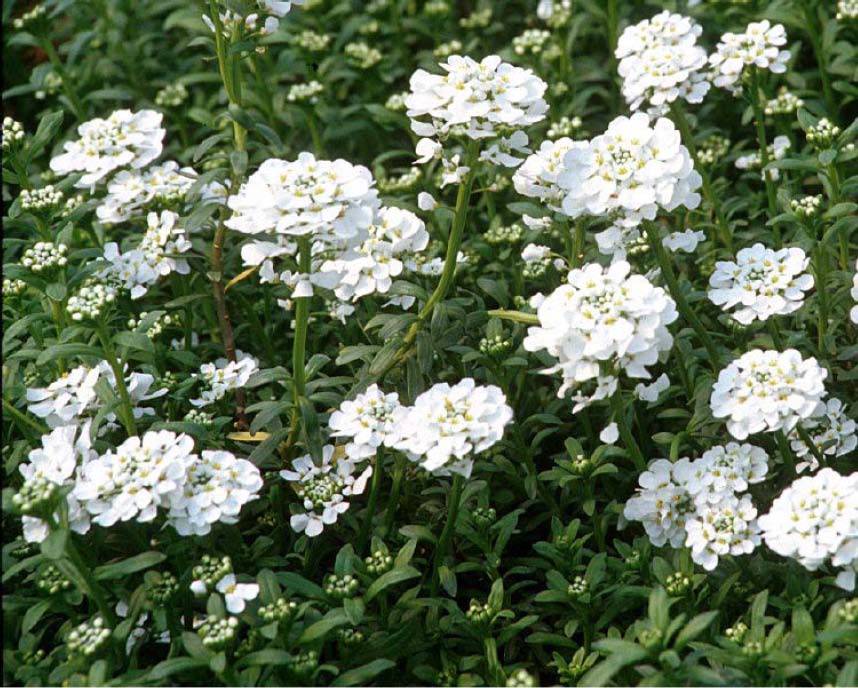
Evergreen Candytuft, Perennial Of The Day


Iberis sempervirens 'Purity' 
Evergreen Candytuft,  Edging Candytuft

Type    Perennial
Hardy range
    3A to 9A
Height    6" to 8" / 15cm to 20cm
Spread    18" to 24" / 45cm to 60cm
Growth rate    Average
Form    Rounded
Exposure    Partial shade or partial sun to full sun
Persistence    Evergreen

Bloom Color    White
Bloom Time    Spring

The flowers are fragrant and showy

Environment
This plant tolerates drought.
This plant will grow in moist soil.
Suitable soil is well-drained/loamy.
The pH preference is an acidic to alkaline (less than 6.8 to more than 7.7) soil.

Leaf Color    Green
This plant has attractive foliage.

Culture Notes
Plants prefer a sunny area, with well-drained fertile soil.  Stem cuttings can be taken in the late summer.  Prune a third of the plant after blooming to maintain the compact habit and vigor of the plant.  Plant with: Phlox subulata, Dianthus, Armeria, and Gypsophila repens.  'Purity' is an improvement of the species, sporting a larger flower and blossoming over a longer period of time.


Iberis sempervirens 'Snowflake'
    Evergreen Candytuft,  Edging Candytuft


Type    Perennial
Hardy range    3A to 9A
Height    8" to 10" / 20cm to 25cm
Spread    18" to 24" / 45cm to 60cm
Growth rate    Fast
Form    Rounded
Exposure    Full sun
Persistence    Evergreen

Bloom Color    White
Bloom Time    Spring

The flowers are fragrant, showy and suitable for cut flowers.

Environment
This plant tolerates drought.
This plant will grow in moist soil.
Suitable soil is well-drained/loamy.
The pH preference is an acidic to alkaline (less than 6.8 to more than 7.7) soil.

Leaf Color    Green
This plant has attractive foliage.

Culture Notes
With its flat clusters of white blossoms, Iberis is one of the more popular dwarf garden plants.  These plants prefer a sunny area, with well-drained fertile soil.  Stem cuttings can be taken in the late summer.  Plant with: Phlox subulata, Dianthus, Armeria, and Gypsophila repens.  'Snowflake' is a shorter cultivar, but it has large leaves and large white blossoms.

Please feel free to comment on any post at any time. All feedback is welcome and we’d love to receive all of your thoughts.

Thank You

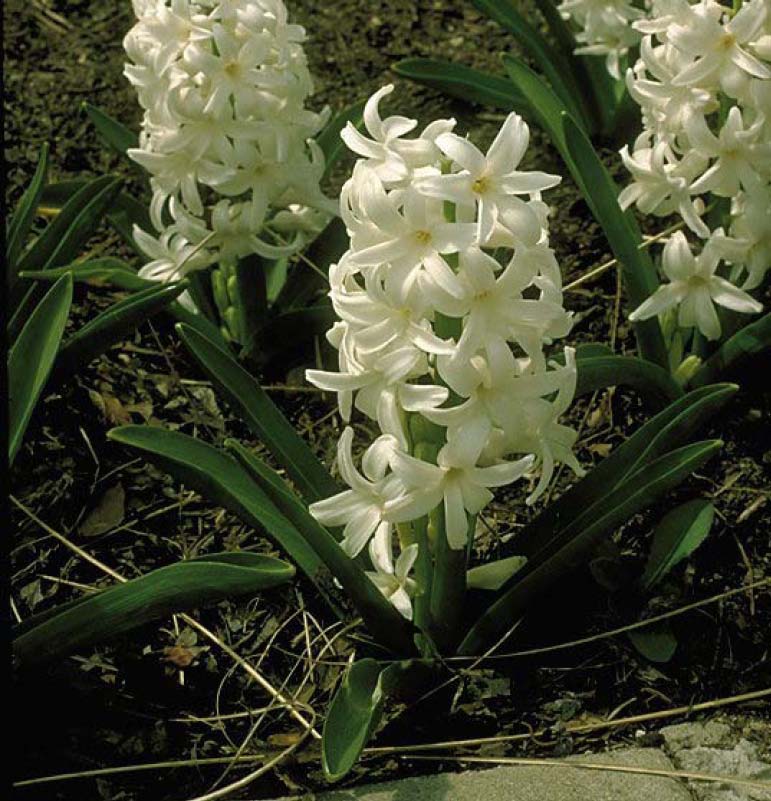
Hyacinth, Featured Plant of The Day


Hyacinthus orientalis
    Hyacinth

Type    Perennial
Hardy range    6A to 9A
Height    10" to 12" / 25cm to 30cm
Spread    3" to 5" / 8cm to 13cm
Growth rate    Slow
Form    Upright or erect
Exposure    Partial shade or partial sun to full sun
Persistence    Deciduous

Bloom Color    Blue, pink, purple, red, white and yellow
Bloom Time    Spring

The flowers are fragrant and suitable for cut flowers.

Environment
This plant will grow in dry to moist soil.
Suitable soil is well-drained/loamy.
The pH preference is  a neutral soil.

Leaf Color    Green


Culture Notes
Bulbs should be purchased and planted in late autumn.  Once the tubular flowers are finished in the spring, they should be removed.  Feed the bulb generously until the foliage goes dormant in the summer.  In colder climates, mulch to protect from the cold winters.  Often the bulbs will not bloom as well in later seasons.  Hyacinths are more commonly used as forced plants and the plants discarded after the plant goes dormant.


Hyacinthus orientalis 'Jan Bos'
    Hyacinth

Type    Perennial
Hardy range    3A to 7A
Height    6" to 10" / 15cm to 25cm
Spread    3" to 5" / 8cm to 13cm
Growth rate    Slow
Form    Upright or erect
Exposure    Full sun
Persistence    Deciduous

Bloom Color    Pink and red
Bloom Time    Spring

The flowers are fragrant and suitable for cut flowers.

Environment
This plant will grow in dry to moist soil.
Suitable soil is well-drained/loamy or sandy.
The pH preference is  a neutral soil.

Leaf Color    Green

Culture Notes
Bulbs should be purchased and planted in late autumn.  Once the tubular flowers are finished in the spring, they should be removed.  Feed the bulb generously until the foliage goes dormant in the summer.  In colder climates, mulch to protect from the cold winters.  Often the bulbs will not bloom as well in later seasons.  Hyacinths are more commonly used as forced plants, and the plants are discarded after the plant goes dormant.

Hyacinthus orientalis 'Atlantic'
    Hyacinth

Type    Perennial
Hardy range    3A to 7A
Height    6" to 10" / 15cm to 25cm
Spread    3" to 5" / 8cm to 13cm
Growth rate    Slow
Form    Upright or erect
Exposure    Full sun
Persistence    Deciduous

Bloom Color    Purple
Bloom Time    Spring

The flowers are fragrant and suitable for cut flowers.

Environment
This plant will grow in dry to moist soil.
Suitable soil is well-drained/loamy or sandy.
The pH preference is  a neutral soil.

Leaf Color    Green

Culture Notes
Bulbs should be purchased and planted in late autumn.  Once the tubular flowers are finished in the spring, they should be removed.  Feed the bulb generously until the foliage goes dormant in the summer.  In colder climates, mulch to protect from the cold winters.  Often the bulbs will not bloom as well in later seasons.  Hyacinths are more commonly used as forced plants, and the plants are discarded after the plant goes dormant.


Wednesday, March 5, 2014

Zebra Iris Featured Plant of The Day

Iris pallida 'Aurea-variegata'
Sweet Iris, Dalmation Iris, Zebra Iris
Type Perennial
Hardy range 4A to 8A
Height 24" to 36" / 60cm to 90cm
Spread 12" to 24" / 30cm to 60cm
Growth rate Average
Form Upright or erect
Exposure Full sun

Bloom Color Blue
Bloom Time Spring and Summer

The flowers are fragrant.


Environment 
This plant will grow in moist soil.
Suitable soil is well-drained/loamy.
The pH preference is a neutral soil.

Leaf Color Green, variegated and yellow

Culture Notes 

The powdery dried-up rhizomes of this species contain an ingredient (orris) which is used in the production of many perfumes. 'Aurea Variegata' has striped, yellowish-green variegated foliage and light blue blossoms.

Wednesday, February 26, 2014

Sweet William Dianthus Featured Plant of The Day

Dianthus barbatus
Sweet William

Type Biennial, perennial
Hardy range 4A to 10A
Height 12" to 24" / 30cm to 60cm
Spread 12" to 24" / 30cm to 60cm
Growth rate Average
Form Upright or erect
Exposure Partial shade or partial sun to full sun
Persistence Deciduous

Bloom Color Pink, red and white
Bloom Time Spring and Summer

The flowers are fragrant, suitable for cut flowers and suitable for dried flowers.

Environment This plant will grow in dry to moist soil.
Suitable soil is well-drained/loamy.
The pH preference is a neutral to alkaline (6.8 to more than 7.7) soil.

Leaf Color Green

Culture Notes This Dianthus is a biennial or a short lived perennial. Only in warmer climates will the mother plant sometimes live through the winter. Division should be made from first year plant. Seeds will differ from mother plant and can be collected after bloom in the summer. Plants go well with: Myosotis, Asclepias, and Gaillardia sp.