Thursday, March 6, 2014

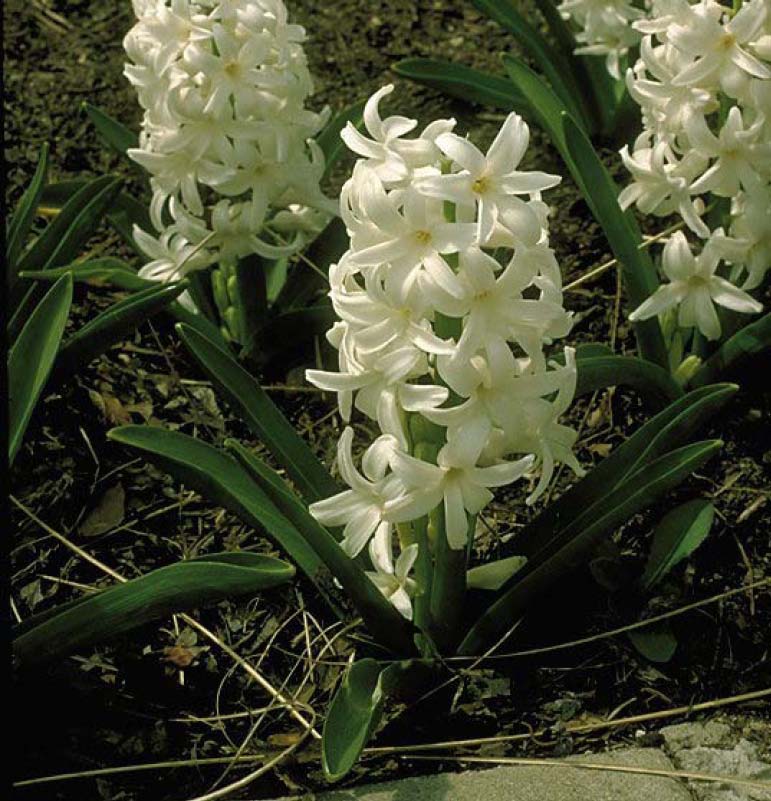
Hyacinth, Featured Plant of The Day


Hyacinthus orientalis
    Hyacinth

Type    Perennial
Hardy range    6A to 9A
Height    10" to 12" / 25cm to 30cm
Spread    3" to 5" / 8cm to 13cm
Growth rate    Slow
Form    Upright or erect
Exposure    Partial shade or partial sun to full sun
Persistence    Deciduous

Bloom Color    Blue, pink, purple, red, white and yellow
Bloom Time    Spring

The flowers are fragrant and suitable for cut flowers.

Environment
This plant will grow in dry to moist soil.
Suitable soil is well-drained/loamy.
The pH preference is  a neutral soil.

Leaf Color    Green


Culture Notes
Bulbs should be purchased and planted in late autumn.  Once the tubular flowers are finished in the spring, they should be removed.  Feed the bulb generously until the foliage goes dormant in the summer.  In colder climates, mulch to protect from the cold winters.  Often the bulbs will not bloom as well in later seasons.  Hyacinths are more commonly used as forced plants and the plants discarded after the plant goes dormant.


Hyacinthus orientalis 'Jan Bos'
    Hyacinth

Type    Perennial
Hardy range    3A to 7A
Height    6" to 10" / 15cm to 25cm
Spread    3" to 5" / 8cm to 13cm
Growth rate    Slow
Form    Upright or erect
Exposure    Full sun
Persistence    Deciduous

Bloom Color    Pink and red
Bloom Time    Spring

The flowers are fragrant and suitable for cut flowers.

Environment
This plant will grow in dry to moist soil.
Suitable soil is well-drained/loamy or sandy.
The pH preference is  a neutral soil.

Leaf Color    Green

Culture Notes
Bulbs should be purchased and planted in late autumn.  Once the tubular flowers are finished in the spring, they should be removed.  Feed the bulb generously until the foliage goes dormant in the summer.  In colder climates, mulch to protect from the cold winters.  Often the bulbs will not bloom as well in later seasons.  Hyacinths are more commonly used as forced plants, and the plants are discarded after the plant goes dormant.

Hyacinthus orientalis 'Atlantic'
    Hyacinth

Type    Perennial
Hardy range    3A to 7A
Height    6" to 10" / 15cm to 25cm
Spread    3" to 5" / 8cm to 13cm
Growth rate    Slow
Form    Upright or erect
Exposure    Full sun
Persistence    Deciduous

Bloom Color    Purple
Bloom Time    Spring

The flowers are fragrant and suitable for cut flowers.

Environment
This plant will grow in dry to moist soil.
Suitable soil is well-drained/loamy or sandy.
The pH preference is  a neutral soil.

Leaf Color    Green

Culture Notes
Bulbs should be purchased and planted in late autumn.  Once the tubular flowers are finished in the spring, they should be removed.  Feed the bulb generously until the foliage goes dormant in the summer.  In colder climates, mulch to protect from the cold winters.  Often the bulbs will not bloom as well in later seasons.  Hyacinths are more commonly used as forced plants, and the plants are discarded after the plant goes dormant.


Wednesday, March 5, 2014

Zebra Iris Featured Plant of The Day

Iris pallida 'Aurea-variegata'
Sweet Iris, Dalmation Iris, Zebra Iris
Type Perennial
Hardy range 4A to 8A
Height 24" to 36" / 60cm to 90cm
Spread 12" to 24" / 30cm to 60cm
Growth rate Average
Form Upright or erect
Exposure Full sun

Bloom Color Blue
Bloom Time Spring and Summer

The flowers are fragrant.


Environment 
This plant will grow in moist soil.
Suitable soil is well-drained/loamy.
The pH preference is a neutral soil.

Leaf Color Green, variegated and yellow

Culture Notes 

The powdery dried-up rhizomes of this species contain an ingredient (orris) which is used in the production of many perfumes. 'Aurea Variegata' has striped, yellowish-green variegated foliage and light blue blossoms.

Wednesday, February 26, 2014

Sweet William Dianthus Featured Plant of The Day

Dianthus barbatus
Sweet William

Type Biennial, perennial
Hardy range 4A to 10A
Height 12" to 24" / 30cm to 60cm
Spread 12" to 24" / 30cm to 60cm
Growth rate Average
Form Upright or erect
Exposure Partial shade or partial sun to full sun
Persistence Deciduous

Bloom Color Pink, red and white
Bloom Time Spring and Summer

The flowers are fragrant, suitable for cut flowers and suitable for dried flowers.

Environment This plant will grow in dry to moist soil.
Suitable soil is well-drained/loamy.
The pH preference is a neutral to alkaline (6.8 to more than 7.7) soil.

Leaf Color Green

Culture Notes This Dianthus is a biennial or a short lived perennial. Only in warmer climates will the mother plant sometimes live through the winter. Division should be made from first year plant. Seeds will differ from mother plant and can be collected after bloom in the summer. Plants go well with: Myosotis, Asclepias, and Gaillardia sp.


Tuesday, February 25, 2014

Kurume Azalea Featured Plant of The Day


Rhododendron x obtusum 'Hinodegire'
Kurume Azalea, Hiryu Azalea
Type Shrub, woody plant
Hardy range 6A to 8A
Height 24" to 4' / 60cm to 1.20m
Spread 36" to 6' / 90cm to 1.80m
Growth rate Slow
Form Rounded
Exposure Partial shade or partial sun
Persistence Evergreen
Bloom Color Lavender and red
Bloom Time Spring and Fall
The flowers are showy.

Environment This plant tolerates some drought. This plant will grow in dry soil. Suitable soil is well-drained/loamy, sandy or clay. The pH preference is an acidic to neutral (less than 6.8 to 7.2) soil.

Leaf Color Green
Fall Color No change in fall color

Culture Notes

Provide this plant with excellent drainage, organic soil and mulching. Do not cultivate around it, since it has surface roots and do not let the soil cover the stem. It is not salt tolerant or drought tolerant and does not do well in sweeping winter winds. This plant is considered mostly allergy free and causes little or no allergy problems in most people. Foliage from most members of this genus is considered poisonous when ingested.
Rhododendrons are ornamental, ericaceous, broad-leaved evergreens. Azaleas belong to this genus, but many are not evergreen. They grow best in shade or partial shade. A south or southwest exposure increases the chance of winter injury to evergreen types when grown in northern climates. Plant in an acid, moist, well-drained soil with a pH between 4.5 and 6.5. Transplanting balled and burlapped or potted plants is most successful. Organic amendments in the backfill help establish plants from containers quickly by encouraging roots to grow out of the container and into backfill soil. The shallow root systems are easily injured by deep cultivation but benefit from mulching.
Plants fail to absorb iron and have yellow leaves with green veins if the soil is not sufficiently acid. Finely ground sulphur can be added to the soil to increase acidity. Have the soil tested before planting in order to determine the pH. Prevent winter burn in northern climates by avoiding exposed planting sites and by shading during winter.
Plants serve as butterfly nectar sources.

Planting and establishing shrubs

The most common cause of young plant failure is planting too deep. Plant the root ball no deeper than it was in the nursery. In most instances, the root flare zone (point where the top-most root in the root ball originates from the trunk) should be located just above the landscape soil surface. Sometimes plants come from the nursery with soil over the root flare. If there is soil over this area, scrape it off. The planting hole should be at least twice the width of the root ball, preferably wider. In all but exceptional circumstances where the soil is very poor, there is no need to incorporate anything into the backfill soil except the loosened soil that came out of the planting hole. Never place ANY soil over the root ball. If a row or grouping of plants is to be installed, excavating or loosening the soil in the entire bed and incorporating organic matter enhances root growth and establishment rate.
Weed suppression during establishment is essential. Apply a 3-inch thick layer of mulch around the plant to help control weed growth. Keep it at least 10 inches from the trunk. If you apply it over the root ball, apply only a one or two inch layer. This allows rainwater and air to easily enter the root ball and keeps the trunk dry. Placing mulch against the trunk or applying too thick a layer above the root ball can kill the plant by oxygen starvation, death of bark, stem and root diseases, prevention of hardening off for winter, vole and other rodent damage to the trunk, keeping soil too wet, or repelling water. Regular irrigation through the first growing season after planting encourages rapid root growth, which is essential for quick plant establishment.


Monday, February 24, 2014

Goldencup St. Johnswort Featured Plant of The Day


Hypericum patulum
Goldencup St. Johnswort
Type Shrub, woody plant
Hardy range 6B to 7B
Height18" to 3' / 45cm to 1.00m
Spread30" to 4' / 75cm to 1.20m
Growth rate Average
Form Rounded
Exposure Partial shade or partial sun to full sun
Persistence Evergreen and semi-evergreen
Bloom Color Yellow
Bloom Time Summer
The flowers are showy.

Leaf Color Green, pink, purple, variegated and yellow  
Fall Color No change in fall color
This plant has attractive foliage.

Environment 
 This plant tolerates some drought. This plant will grow in dry soil. Suitable soil is well-drained/loamy, sandy or clay. The pH preference is a neutral soil.

Culture Notes
These shrubs prefer light loamy soil and a fairly sunny position. They are improved by severe pruning in the spring, with old, weak shoots cut out and the remainder cut to 9-12 inches. 
Planting and establishing shrubs
The most common cause of young plant failure is planting too deep. Plant the root ball no deeper than it was in the nursery. In most instances, the root flare zone (point where the top-most root in the root ball originates from the trunk) should be located just above the landscape soil surface. Sometimes plants come from the nursery with soil over the root flare. If there is soil over this area, scrape it off. The planting hole should be at least twice the width of the root ball, preferably wider. In all but exceptional circumstances where the soil is very poor, there is no need to incorporate anything into the backfill soil except the loosened soil that came out of the planting hole. Never place ANY soil over the root ball. If a row or grouping of plants is to be installed, excavating or loosening the soil in the entire bed and incorporating organic matter enhances root growth and establishment rate.
Weed suppression during establishment is essential. Apply a 3-inch thick layer of mulch around the plant to help control weed growth. Keep it at least 10 inches from the trunk. If you apply it over the root ball, apply only a one or two inch layer. This allows rainwater and air to easily enter the root ball and keeps the trunk dry. Placing mulch against the trunk or applying too thick a layer above the root ball can kill the plant by oxygen starvation, death of bark, stem and root diseases, prevention of hardening off for winter, vole and other rodent damage to the trunk, keeping soil too wet, or repelling water. Regular irrigation through the first growing season after planting encourages rapid root growth, which is essential for quick plant establishment.