Thursday, March 13, 2014

Showy Lady's Slipper, Featured Plant of The Day

Cypripedium reginae
Showy Lady's Slipper

Type Perennial
Hardy range 5A to 8B
Height 18" to 30" / 45cm to 75cm
Growth rate Slow
Form Upright or erect
Exposure Full shade to partial sun
Persistence Deciduous

Bloom Color Pink and white
Bloom Time Spring and Summer

Environment This plant will grow in moist soil.
Suitable soil is well-drained/loamy.
The pH preference is an acidic (less than 6.8) soil.

Leaf Color Green

Culture Notes Needs cold winters to thrive.

Please feel free to comment on any post at any time all feedback is welcome.

Tuesday, March 11, 2014

'Bagatelle' Japanese Barberry, Featured Plant of The Day

Berberis thunbergii 'Bagatelle'
    Japanese Barberry

Type    Shrub, groundcover, woody plant
Hardy range    4A to 7B
Height    12" to 18" / 30cm to 45cm
Spread    12" to 24" / 30cm to 60cm
Growth rate    Slow
Form    Rounded and spreading or horizontal
Exposure    Full shade to full sun
Persistence    Semi-evergreen

Bloom Color    Yellow
Bloom Time    Spring

Environment
This plant tolerates some drought and a little salt.
This plant will grow in dry soil.
Suitable soil is well-drained/loamy, sandy or clay.
The pH preference is an acidic to alkaline (less than 6.8 to more than 7.7) soil.

Leaf Color    Purple
Fall Color    Orange, red and yellow
This plant has attractive foliage and attractive fall colors.

Culture Notes
Japanese Barberry is thorny, so it's useful for barrier plantings.  The plant tolerates most light exposures and soils, but purple-leafed cultivars turn green in shade.  This shrub grows slowly but transplants easily.   Japanese Barberry can be sheared and used as a hedge plant.

The main ornamental features are persistent red fruits and fall color in shades of red, orange and yellow. This cultivar is a form of the variety atropurpurea and is more compact than many other cultivars. This plant is considered mostly allergy free and causes little or no allergy problems in most people.

Planting and establishing shrubs

The most common cause of young plant failure is planting too deep.  Plant the root ball no deeper than it was in the nursery.  In most instances, the root flare zone (point where the top-most root in the root ball originates from the trunk) should be located just above the landscape soil surface. Sometimes plants come from the nursery with soil over the root flare. If there is soil over this area, scrape it off.  The planting hole should be at least twice the width of the root ball, preferably wider.  In all but exceptional circumstances where the soil is very poor, there is no need to incorporate anything into the backfill soil except the loosened soil that came out of the planting hole.  Never place ANY soil over the root ball. If a row or grouping of plants is to be installed, excavating or loosening the soil in the entire bed and incorporating organic matter enhances root growth and establishment rate.

Weed suppression during establishment is essential.  Apply a 3-inch thick layer of mulch around the plant to help control weed growth.  Keep it at least 10 inches from the trunk.  If you apply it over the root ball, apply only a one or two inch layer.   This allows rainwater and air to easily enter the root ball and keeps the trunk dry.  Placing mulch against the trunk or applying too thick a layer above the root ball can kill the plant by oxygen starvation, death of bark, stem and root diseases, prevention of hardening off for winter, vole and other rodent damage to the trunk, keeping soil too wet, or repelling water.  Regular irrigation through the first growing season after planting encourages rapid root growth, which is essential for quick plant establishment.

Monday, March 10, 2014

Blue False Indigo, Featured Plant of The Day


Baptisia australis     
syn. Baptisia caerulea; Baptisia confusa; Baptisia exaltata; Baptisia minor; Baptisia versicolor
    Blue False Indigo,  Blue Wild Indigo


Type    Perennial
Hardy range    3A to 9A
Height    24" to 4' / 60cm to 1.20m
Spread    36" to 4' / 90cm to 1.20m
Growth rate    Slow
Form    Upright or erect
Exposure    Partial shade or partial sun to full sun
Persistence    Deciduous

Bloom Color    Blue
Bloom Time    Spring and Summer

The flowers are suitable for cut flowers and suitable for dried flowers.

Environment
This plant tolerates drought.
This plant will grow in dry to moist soil.
Suitable soil is well-drained/loamy or sandy.
The pH preference is an acidic to neutral (less than 6.8 to 7.2) soil.

Leaf Color    Green and silvery
This plant has attractive foliage.

Culture Notes
This plant may need staking to maintain its shrub-like form.  Baptisia will self-sow and the resulting seedlings can be transplanted.  Although slow-growing the first few years, the blue dye obtained from its seeds is used as an alternative to the dye of Indigo when shortened supplies warrant it.  The mature plant is difficult to transplant, because of a deep tap root.  Deadhead after blooming; Cut back to 6" in the fall; Remove dead foliage only in the spring.   Plants serve as hosts for butterfly larvae.  Often planted with: Helianthus, Hibiscus, Miscanthus, Pennisetum, Heliopsis, and Rudbeckia.

Use a wire cage or stake and twine for support if desired.  Although deadheading spent blossoms is preferable, you can leave blooms on this plant for decorative seed pods (good for seed collecting).

Thursday, March 6, 2014

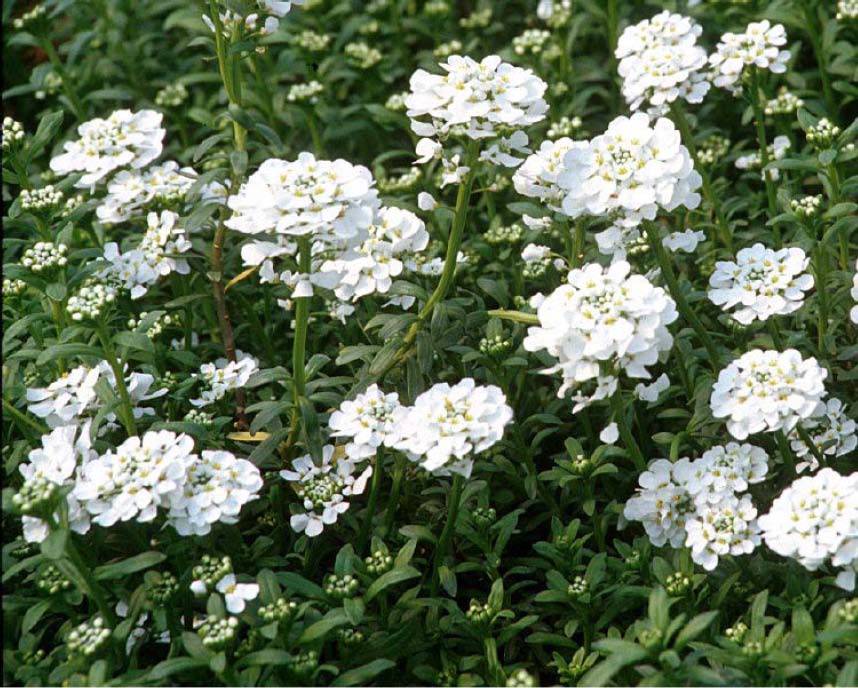
Evergreen Candytuft, Perennial Of The Day


Iberis sempervirens 'Purity' 
Evergreen Candytuft,  Edging Candytuft

Type    Perennial
Hardy range
    3A to 9A
Height    6" to 8" / 15cm to 20cm
Spread    18" to 24" / 45cm to 60cm
Growth rate    Average
Form    Rounded
Exposure    Partial shade or partial sun to full sun
Persistence    Evergreen

Bloom Color    White
Bloom Time    Spring

The flowers are fragrant and showy

Environment
This plant tolerates drought.
This plant will grow in moist soil.
Suitable soil is well-drained/loamy.
The pH preference is an acidic to alkaline (less than 6.8 to more than 7.7) soil.

Leaf Color    Green
This plant has attractive foliage.

Culture Notes
Plants prefer a sunny area, with well-drained fertile soil.  Stem cuttings can be taken in the late summer.  Prune a third of the plant after blooming to maintain the compact habit and vigor of the plant.  Plant with: Phlox subulata, Dianthus, Armeria, and Gypsophila repens.  'Purity' is an improvement of the species, sporting a larger flower and blossoming over a longer period of time.


Iberis sempervirens 'Snowflake'
    Evergreen Candytuft,  Edging Candytuft


Type    Perennial
Hardy range    3A to 9A
Height    8" to 10" / 20cm to 25cm
Spread    18" to 24" / 45cm to 60cm
Growth rate    Fast
Form    Rounded
Exposure    Full sun
Persistence    Evergreen

Bloom Color    White
Bloom Time    Spring

The flowers are fragrant, showy and suitable for cut flowers.

Environment
This plant tolerates drought.
This plant will grow in moist soil.
Suitable soil is well-drained/loamy.
The pH preference is an acidic to alkaline (less than 6.8 to more than 7.7) soil.

Leaf Color    Green
This plant has attractive foliage.

Culture Notes
With its flat clusters of white blossoms, Iberis is one of the more popular dwarf garden plants.  These plants prefer a sunny area, with well-drained fertile soil.  Stem cuttings can be taken in the late summer.  Plant with: Phlox subulata, Dianthus, Armeria, and Gypsophila repens.  'Snowflake' is a shorter cultivar, but it has large leaves and large white blossoms.

Please feel free to comment on any post at any time. All feedback is welcome and we’d love to receive all of your thoughts.

Thank You

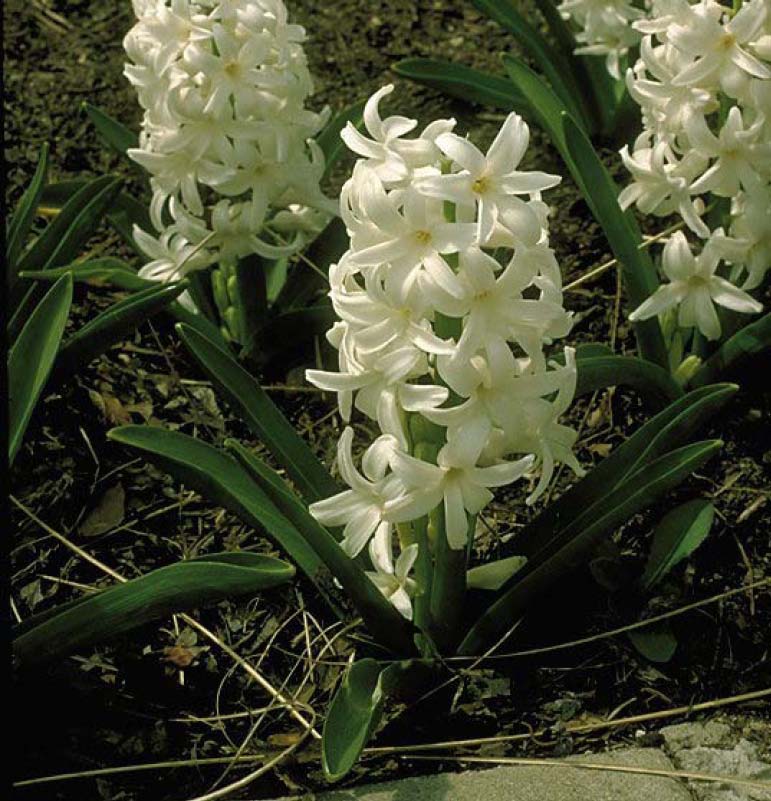
Hyacinth, Featured Plant of The Day


Hyacinthus orientalis
    Hyacinth

Type    Perennial
Hardy range    6A to 9A
Height    10" to 12" / 25cm to 30cm
Spread    3" to 5" / 8cm to 13cm
Growth rate    Slow
Form    Upright or erect
Exposure    Partial shade or partial sun to full sun
Persistence    Deciduous

Bloom Color    Blue, pink, purple, red, white and yellow
Bloom Time    Spring

The flowers are fragrant and suitable for cut flowers.

Environment
This plant will grow in dry to moist soil.
Suitable soil is well-drained/loamy.
The pH preference is  a neutral soil.

Leaf Color    Green


Culture Notes
Bulbs should be purchased and planted in late autumn.  Once the tubular flowers are finished in the spring, they should be removed.  Feed the bulb generously until the foliage goes dormant in the summer.  In colder climates, mulch to protect from the cold winters.  Often the bulbs will not bloom as well in later seasons.  Hyacinths are more commonly used as forced plants and the plants discarded after the plant goes dormant.


Hyacinthus orientalis 'Jan Bos'
    Hyacinth

Type    Perennial
Hardy range    3A to 7A
Height    6" to 10" / 15cm to 25cm
Spread    3" to 5" / 8cm to 13cm
Growth rate    Slow
Form    Upright or erect
Exposure    Full sun
Persistence    Deciduous

Bloom Color    Pink and red
Bloom Time    Spring

The flowers are fragrant and suitable for cut flowers.

Environment
This plant will grow in dry to moist soil.
Suitable soil is well-drained/loamy or sandy.
The pH preference is  a neutral soil.

Leaf Color    Green

Culture Notes
Bulbs should be purchased and planted in late autumn.  Once the tubular flowers are finished in the spring, they should be removed.  Feed the bulb generously until the foliage goes dormant in the summer.  In colder climates, mulch to protect from the cold winters.  Often the bulbs will not bloom as well in later seasons.  Hyacinths are more commonly used as forced plants, and the plants are discarded after the plant goes dormant.

Hyacinthus orientalis 'Atlantic'
    Hyacinth

Type    Perennial
Hardy range    3A to 7A
Height    6" to 10" / 15cm to 25cm
Spread    3" to 5" / 8cm to 13cm
Growth rate    Slow
Form    Upright or erect
Exposure    Full sun
Persistence    Deciduous

Bloom Color    Purple
Bloom Time    Spring

The flowers are fragrant and suitable for cut flowers.

Environment
This plant will grow in dry to moist soil.
Suitable soil is well-drained/loamy or sandy.
The pH preference is  a neutral soil.

Leaf Color    Green

Culture Notes
Bulbs should be purchased and planted in late autumn.  Once the tubular flowers are finished in the spring, they should be removed.  Feed the bulb generously until the foliage goes dormant in the summer.  In colder climates, mulch to protect from the cold winters.  Often the bulbs will not bloom as well in later seasons.  Hyacinths are more commonly used as forced plants, and the plants are discarded after the plant goes dormant.